
The best battery for a Mazda RX-8 in New Zealand is the Century Ultra Hi Performance (DIN53L MF) or the Optima Red Top 35. These units provide the critical Cold Cranking Amps (640+ CCA) required to rapidly spin the Renesis rotary engine, effectively preventing engine flooding and cold-start failures during New Zealand winters.
Why the Renesis Engine Demands More Power
Owning a Mazda RX-8 is a unique experience, distinct from any piston-driven vehicle on the road. However, the Renesis rotary engine comes with a specific set of operational quirks, the most notorious of which is its starting procedure. Unlike a standard 4-cylinder engine that relies on vertical momentum, the rotary engine requires high rotational speed to generate sufficient compression for ignition.
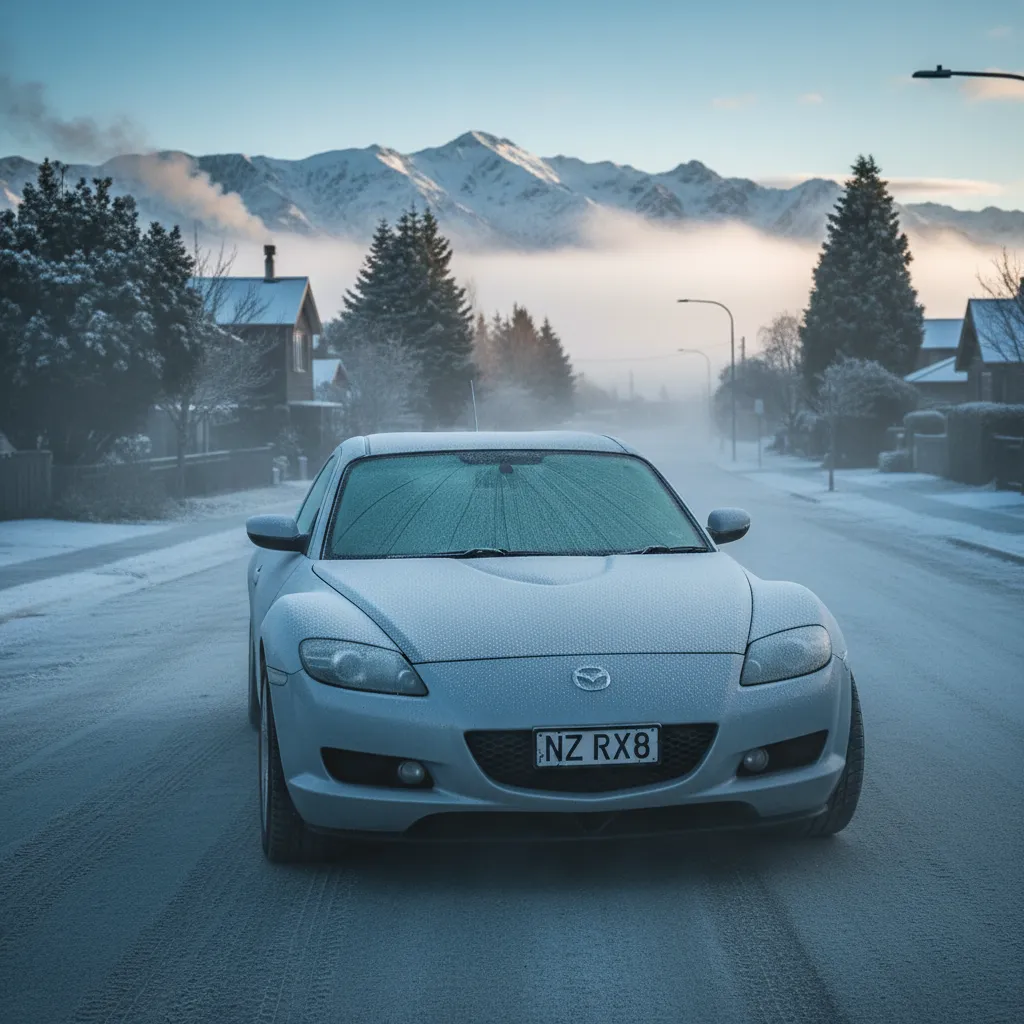
For New Zealand owners, this challenge is compounded by our climate. While we may not experience the sub-zero temperatures of Northern Europe, the damp, chilling cold of a South Island frost or a wet Wellington morning can significantly reduce battery efficiency. If the starter motor cannot spin the rotors fast enough (ideally above 250 RPM), the engine ECU will inject fuel but fail to ignite it. This leads to the dreaded “flooding” scenario, where spark plugs become soaked in petrol, washing away the oil seal necessary for compression.
Therefore, the battery is not just an accessory; it is the lifeline of the RX-8. A weak battery doesn’t just mean the car won’t start—it often necessitates a tow truck, a spark plug change, and a deflooding procedure that can be costly and time-consuming. Upgrading your power source is the single most effective preventative maintenance step you can take for winter driving.
CCA (Cold Cranking Amps) Requirements
What is the Minimum CCA for an RX-8?
Cold Cranking Amps (CCA) refers to the amount of current a battery can deliver at -18°C for 30 seconds while maintaining at least 7.2 volts. For the Mazda RX-8, the factory specifications were often adequate for new engines in mild climates, but as the engines age and compression naturally lowers, the demand on the battery increases.
In the New Zealand market, you should consider 600 CCA as the absolute baseline minimum. However, for peace of mind and optimal performance, we strongly recommend aiming for 640 to 800 CCA. This surplus energy ensures that even if the battery degrades slightly over time, or if the car has sat unused for a week, there is still enough punch to whip the starter motor into action immediately.
The Relationship Between Starter Motors and Batteries
It is impossible to discuss the best battery for an RX-8 without mentioning the starter motor. Early models (Series 1, 2003-2008) often came with a slower starter motor. Many NZ owners have upgraded to the N3Z1 (Series 2) starter motor, which spins significantly faster (2.0kW power).
A high-CCA battery works in synergy with the upgraded starter. The battery provides the high current flow required to maximize the torque of the 2kW starter. If you have a high-performance battery but the original weak starter, you may still face issues. Conversely, a powerful starter paired with a generic 400 CCA battery will cause significant voltage drop, potentially failing to start the car on a cold morning.

Top Contenders: Optima vs. Century Batteries
When browsing automotive retailers in New Zealand, such as Repco, Supercheap Auto, or battery specialists, you will generally face a choice between traditional Lead-Acid batteries (like Century) and Absorbed Glass Mat (AGM) batteries (like Optima). Here is how they stack up for the RX-8.
1. Century Ultra Hi Performance (The Local Favorite)
Century is a staple in the NZ automotive market. For the RX-8, the DIN53L MF or the slightly larger DIN65L (if modified to fit) are popular choices.
- Pros: Widely available, cost-effective, and designed specifically for NZ/Australian conditions. They offer excellent warranty support locally.
- Cons: Being a standard flooded lead-acid battery, they are heavier and can be prone to acid leaks if the casing is compromised. They generally have a shorter lifespan than AGM batteries.
- Verdict: The “Best Bang for Buck.” If you drive your RX-8 daily and want a reliable start without breaking the bank, this is the standard choice.
2. Optima Red Top (The AGM Powerhouse)
The Optima Red Top (specifically the Group 35 model) is legendary in the RX-8 community worldwide.
- Pros: AGM technology means it is spill-proof and vibration resistant. It delivers an incredibly high burst of ignition power (often 720+ CCA) in a compact package. It holds a charge longer during periods of inactivity.
- Cons: Significantly more expensive than Century options. Requires a specific charging profile if it goes flat.
- Verdict: The “Enthusiast’s Choice.” If your RX-8 is a weekend warrior or you live in the colder parts of the South Island, the investment is justified to prevent flooding.
3. Varta Silver Dynamic
Varta is an excellent middle ground, offering European engineering often found in luxury vehicles. The Silver Dynamic range offers high CCA and fast recharge rates, which is beneficial for the short trips common in Auckland or Wellington city driving.

Battery Relocation Kits: Performance and Space
A popular modification in the New Zealand RX-8 scene is relocating the battery to the boot. This serves two primary purposes: weight distribution and engine bay heat management.
Why Relocate?
The RX-8 engine bay is notoriously hot. Rotary engines generate immense heat, and the battery sits relatively close to the engine block. Excessive heat accelerates the chemical degradation of the battery, shortening its lifespan. By moving the battery to the boot, you place it in a cooler environment.
Furthermore, moving a 15kg weight from the front nose to the rear helps achieve the perfect 50/50 weight distribution the RX-8 is famous for, improving handling dynamics on twisty NZ backroads.
Technical Requirements for Relocation
If you decide to relocate, you cannot simply use standard wire. You must use 0 Gauge (0 AWG) welding cable to prevent voltage drop over the long distance from the boot to the starter motor. A weak cable will result in lower voltage at the starter, negating the benefits of a good battery.
You will also need:
- A sealed battery box (mandatory for WOF if using a lead-acid battery inside the cabin area).
- A circuit breaker (150A – 200A) placed close to the battery for safety.
- Secure mounting brackets to ensure the battery does not become a projectile during braking.

Maintaining Battery Health in the Cold
Even the best battery for an RX-8 in NZ will fail if not maintained. The parasitic draw on an RX-8 (from the alarm and ECU) is relatively high.
Use a Trickle Charger (Smart Charger)
If your RX-8 is not your daily driver, a smart charger (like a CTEK MXS 5.0) is essential. These devices monitor the battery health and apply a maintenance charge to keep it at 100% without overcharging. This is particularly important for AGM batteries like the Optima.
Clean Your Terminals
Corrosion increases resistance. A white, powdery residue on your terminals can reduce the CCA reaching your starter by 20% or more. Clean them regularly with a wire brush and hot water, and coat them with dielectric grease or terminal spray.
Avoid Short Trips
Rotary engines run rich on startup. Short trips (under 10 minutes) do not allow the alternator enough time to replenish the energy used to start the car, nor do they allow the engine to get hot enough to burn off carbon deposits. This is a recipe for a flat battery and a flooded engine. If you must move the car a short distance, hold the revs at 3000 RPM for 10 seconds before shutting off to help clear unburnt fuel.
People Also Ask (PAA)
What group size battery fits a Mazda RX-8?
The standard battery group size for a Mazda RX-8 is Group 35. However, many NZ owners fit slightly larger batteries, such as the DIN53 or DIN65, provided the battery tray is modified or the tie-down bracket is adjusted to accommodate the extra height or length.
How many CCA do I need for a rotary engine?
You should aim for a minimum of 600 CCA for a rotary engine in a temperate climate. In New Zealand winters, 640 to 800 CCA is highly recommended to ensure fast cranking speeds and prevent engine flooding.
Why does my RX-8 struggle to start when hot?
Hard starting when hot is usually a sign of low engine compression, not just a battery issue. However, a weak starter motor or a failing battery can mimic these symptoms. Upgrading to a 2kW starter motor and a high-CCA battery can mask low compression issues temporarily by spinning the engine faster.
Is an AGM battery better for an RX-8?
Yes, AGM (Absorbed Glass Mat) batteries like the Optima Red Top are generally better for the RX-8. They vibrate less, are spill-proof, withstand heat better, and provide higher burst energy (CCA) compared to standard lead-acid batteries.
Can I use a lithium battery in my RX-8?
Yes, Lithium Iron Phosphate (LiFePO4) batteries are becoming popular for track-focused RX-8s due to their extreme weight savings. However, they are very expensive and perform poorly in near-freezing temperatures compared to AGM or Lead-Acid batteries, making them less ideal for NZ street cars in winter.
How do I de-flood an RX-8?
To de-flood an RX-8, hold the accelerator pedal flat to the floor (this cuts fuel injection) and crank the engine for 5-10 seconds. Release the pedal and try to start normally. If this fails, you may need to remove and clean the spark plugs or tow the vehicle.