
The RX8 ignition system in NZ vehicles is the critical lifeline of the Renesis rotary engine, comprised of four ignition coils, high-tension leads, and specialized leading and trailing spark plugs. Due to the rotary engine’s high-RPM nature, maintaining a healthy ignition system is essential to prevent catalytic converter failure, engine flooding, and loss of compression.
The Importance of Healthy Ignition in Rotaries
For New Zealand Mazda RX-8 owners, the ignition system is not merely a component for starting the vehicle; it is the single most critical factor in the longevity of the Renesis 13B-MSP engine. Unlike piston engines, where a misfire might cause a rough idle, an ignition failure in a rotary engine can lead to catastrophic engine damage in a very short period.
The rotary engine fires three times per revolution of the output shaft, meaning the ignition coils and spark plugs work roughly twice as hard as those in a standard four-stroke piston engine. This intense workload generates significant heat and electrical stress. When an ignition coil fails or a spark plug fouls, unburnt fuel is dumped directly into the exhaust manifold.
This unburnt fuel enters the catalytic converter, where it ignites, causing the converter to superheat and melt. A clogged catalytic converter creates immense backpressure, which can overheat the engine seals and ultimately destroy the engine’s compression. Therefore, in the NZ automotive aftermarket, treating the ignition system as a consumable maintenance item—rather than a “fix it when it breaks” part—is the gold standard for RX-8 ownership.

Why NZ Climate Matters
New Zealand’s variable climate, ranging from the humid north to the freezing alpine conditions of the south, places additional strain on ignition components. Cold starts require a potent spark to ignite the rich fuel mixture necessary to turn over a cold rotary engine. A weak ignition system in winter often results in the dreaded “flooded engine” scenario, a common plight for Kiwi RX-8 owners that often requires a tow truck or a complex deflooding procedure.
Coils, Leads, and Spark Plugs: The Holy Trinity
When upgrading or maintaining your rx8 ignition system in NZ, it is industry best practice to replace all three components simultaneously. This group is often referred to as the “Holy Trinity” of RX-8 maintenance.
1. Ignition Coils: OEM vs. Upgrades
The stock Mazda ignition coils (specifically the early revisions) are notorious for failing around the 30,000km to 50,000km mark. As the coils age, they develop white spots on the bottom, indicating arcing and insulation breakdown. Weak coils fail to ignite the mixture completely at high RPMs.
Replacement Options in NZ:
- Genuine Mazda (Revision C): The latest iteration of the OEM coil is significantly more reliable than the originals found on 2003-2005 models. They are a safe bet for stock vehicles.
- LS Coil Conversion Kits: For enthusiasts seeking performance, converting to General Motors LS2/Yukon coils (D585) is a popular upgrade in the NZ aftermarket. These coils provide a much hotter spark and have a massive heat sink, making them nearly indestructible compared to the stock units.
- High-Performance Aftermarket: Brands like Black Halo Racing (BHR) or reputable NZ performance shops offer plug-and-play kits that bridge the gap between stock reliability and race performance.
2. Spark Plugs: Leading and Trailing
The RX-8 uses two different types of spark plugs per rotor: Leading (Lower) and Trailing (Upper). Mixing these up can cause engine damage.
- Leading Plugs (RE7C-L): These assist in the initial ignition process.
- Trailing Plugs (RE9B-T): These fire slightly later to ensure complete combustion and clean the housing.
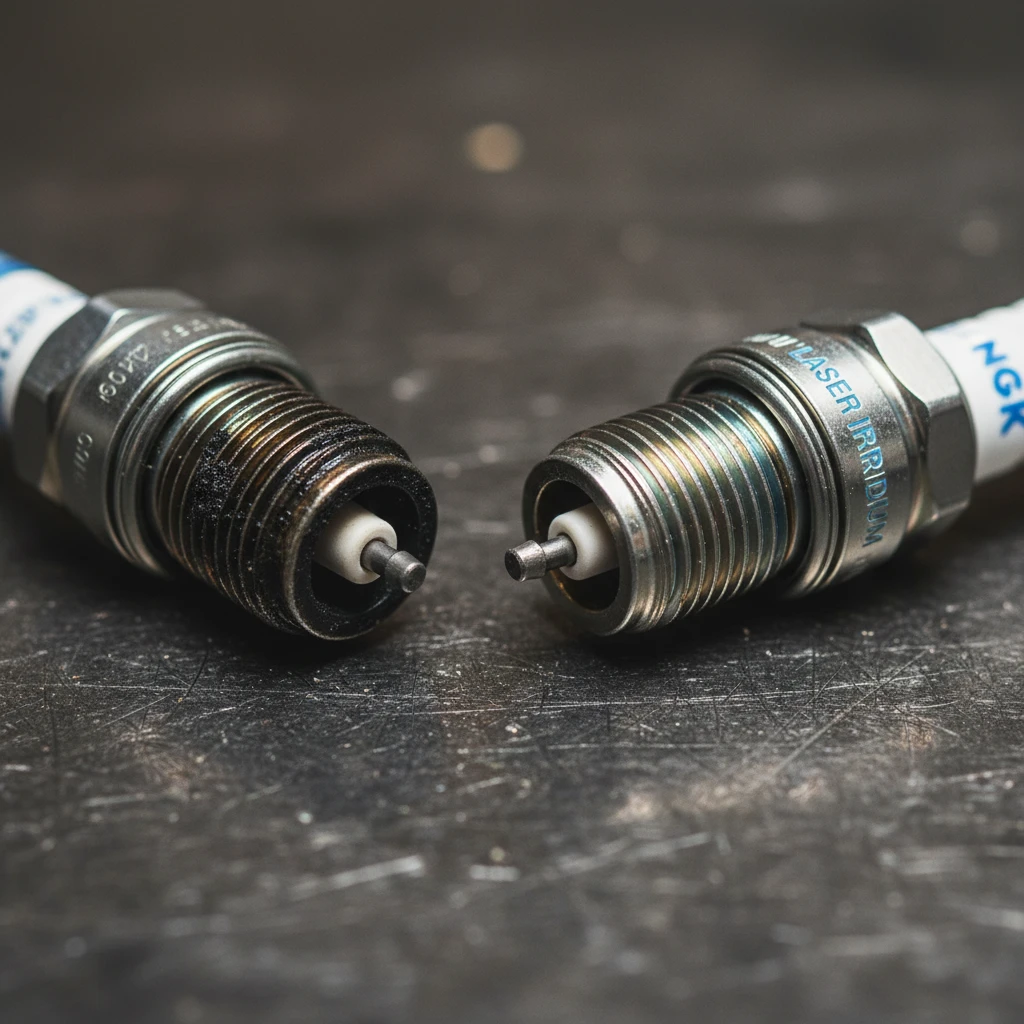
In the New Zealand market, NGK Laser Iridium plugs are the only recommended option. While copper plugs exist, they do not last long enough to be viable given the labor required to access them. Be wary of counterfeit plugs sold on general auction sites; always purchase from reputable NZ automotive electrical suppliers.
3. High-Tension Leads (Wires)
Ignition leads degrade over time due to the extreme heat of the engine bay. The insulation cracks, leading to voltage leaks where the spark jumps to the engine block instead of the plug. When sourcing parts in NZ, look for 8mm or 10mm silicone wires. Thicker wires generally offer lower resistance and better heat shielding, ensuring the full voltage from the coil reaches the spark plug.
Starter Motor Upgrades for Cold Starts
One of the most significant improvements you can make to an RX-8’s ignition and starting reliability is upgrading the starter motor. The early model RX-8s (Series 1, 2003-2008) were shipped with a weak starter motor that often struggles to crank the engine fast enough as the engine ages and compression naturally dips.
The N3Z1 Upgrade
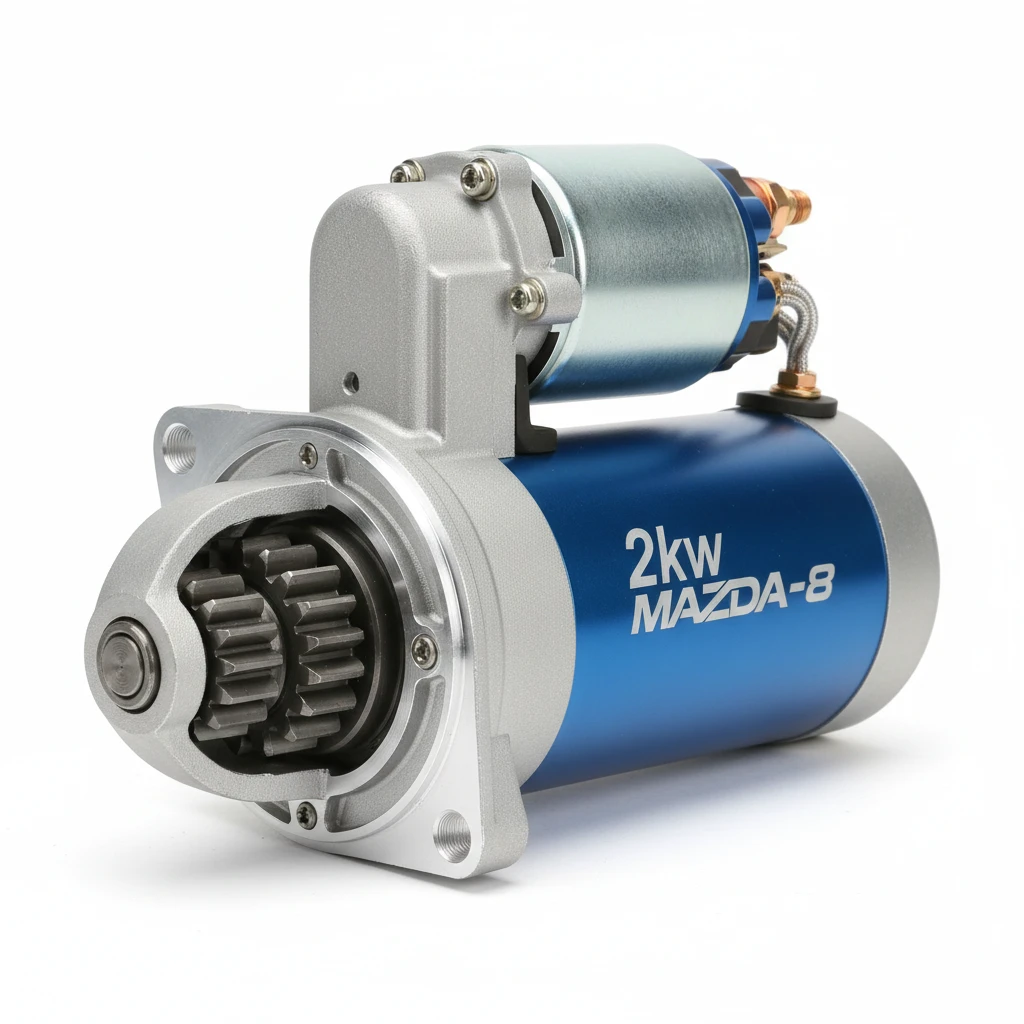
The original starter spun at a relatively slow speed, often failing to reach the 250 RPM threshold required for a quick start. Mazda eventually released an upgraded starter (Part number N3Z1) for the Series 2 models, which is a direct bolt-on upgrade for older models.
- Original Starter (N3H1): Rated at roughly 1.2kW to 1.4kW. Known for slow cranking, especially when the engine is hot.
- Upgraded Starter (N3Z1): Rated at 2.0kW with 13 or 14 teeth on the pinion gear.
Installing a 2kW starter increases cranking speed significantly (often exceeding 280-300 RPM). This higher speed generates more compression momentum, allowing the engine to fire almost instantly, reducing wear on the battery and the ignition coils. In New Zealand, where imported RX-8s are common, checking which starter you have is the first step in diagnosing hard starting issues.
Troubleshooting Ignition Failures
Diagnosing ignition issues early can save your engine. Here is how to identify problems within the rx8 ignition system nz context.
Common Symptoms
- Hard Starting: If the car takes more than 3 seconds to crank, or struggles to start when the engine is hot, your ignition system (or compression) is suspect.
- Misfires at High RPM: A breakup in power above 6,000 RPM usually points to weak coils that cannot recharge fast enough for the high cycle rate.
- Rough Idle: The car shakes or the RPM needle bounces while stopped.
- Flashing Check Engine Light (CEL): This is a critical warning. A flashing CEL indicates an active misfire. Stop driving immediately to save the catalytic converter.
Testing Your Coils
While you can use a multimeter to check the resistance of the coils (primary and secondary windings), this method is often unreliable for RX-8 coils because they tend to fail under load/heat, not necessarily when cold. The most effective test is the “HEI Spark Tester” method.
Using an inexpensive HEI tester (available at most NZ auto parts stores), you can visually verify if the coil can jump a large gap. A healthy RX-8 coil should produce a strong, blue-white spark. A weak orange or red spark indicates the coil is near death. Furthermore, visually inspecting the bottom of the coil for “burn marks” or white oxidation spots is a tell-tale sign of arcing.

People Also Ask
How often should I change my RX-8 ignition coils?
It is recommended to change OEM Mazda ignition coils every 30,000km to 50,000km. If you are using upgraded LS coils (D585), they can last significantly longer, often exceeding 100,000km, but spark plugs should still be checked regularly.
What is the best spark plug for a Mazda RX-8 in NZ?
The best spark plugs are the NGK Laser Iridium series. Specifically, you need two RE7C-L (Leading) and two RE9B-T (Trailing) plugs. Avoid substituting these with standard copper plugs as they cannot withstand the rotary heat profile.
Can a bad ignition system cause low compression?
Indirectly, yes. A bad ignition system leads to unburnt fuel washing away the oil film inside the rotor housing (washout), causing accelerated seal wear. It also clogs the catalytic converter, creating backpressure that overheats and warps internal engine seals.
How do I know if my RX-8 starter motor is bad?
If your battery is healthy but the engine cranks slowly (creates a sluggish “wurr-wurr” sound rather than a fast zip), your starter is likely weak. A compression test usually measures cranking RPM; if it is below 200 RPM, the starter needs upgrading.
How much does a full ignition replacement cost in NZ?
In New Zealand, a full kit including 4 OEM-spec coils, 4 NGK iridium plugs, and a set of leads typically costs between $600 and $900 NZD, depending on whether you choose Genuine Mazda parts or high-quality aftermarket equivalents.
Is the LS coil upgrade worth it for a street car?
Yes. The LS coil upgrade is considered one of the best reliability modifications for any RX-8. It provides a more consistent spark, reduces the chance of flooding, and the coils are generally cheaper to replace individually than OEM Mazda coils.