
The Mazda RX-8 Series 1 starter motor price in New Zealand typically ranges from $350 to $650 NZD for a high-quality aftermarket or refurbished OEM unit. Upgrading to the Series 2 (S2) 2.0kW 14-tooth starter is the industry standard solution for resolving slow cranking and hot start issues, offering a direct bolt-on fitment that increases cranking speed by over 50 RPM.
Owning a Mazda RX-8 comes with a unique set of maintenance rituals, but few are as critical as ensuring your Renesis engine cranks at the correct speed. For owners of the Series 1 (2003–2008) RX-8, the original starter motor is often the Achilles’ heel of the ignition system. The factory-installed units were frequently underpowered, leading to the dreaded “slow crank” phenomenon that can mimic engine failure or lead to engine flooding.
In the New Zealand automotive market, sourcing the correct upgrade is vital for the longevity of your rotary engine. This guide explores the technical necessity of upgrading from the S1 to the S2 starter motor, analyzes current market pricing, and details why the 2.0kW upgrade is the best investment you can make for your vehicle’s reliability.
Slow Cranking Issues on Series 1 RX-8s
The Series 1 Mazda RX-8, produced between 2003 and 2008, was originally equipped with a starter motor that, in retrospect, was insufficient for the long-term demands of the 13B-MSP Renesis engine. The early models (2003-2005) often came with a 1.2kW starter motor. While this was sufficient for a brand-new engine with perfect compression, as the rotary engine ages and apex seals wear slightly, the engine requires higher rotational speeds to generate enough compression to fire.
Rotary engines operate differently from piston engines. They rely heavily on centrifugal force and rapid rotation to seal the combustion chambers during the starting sequence. If the cranking speed falls below 200 RPM, the apex seals may not seal effectively against the housing, resulting in a “no-start” condition, particularly when the engine is hot. This is often misdiagnosed as terminal engine failure requiring a rebuild, when in reality, the starter simply isn’t spinning the rotors fast enough.
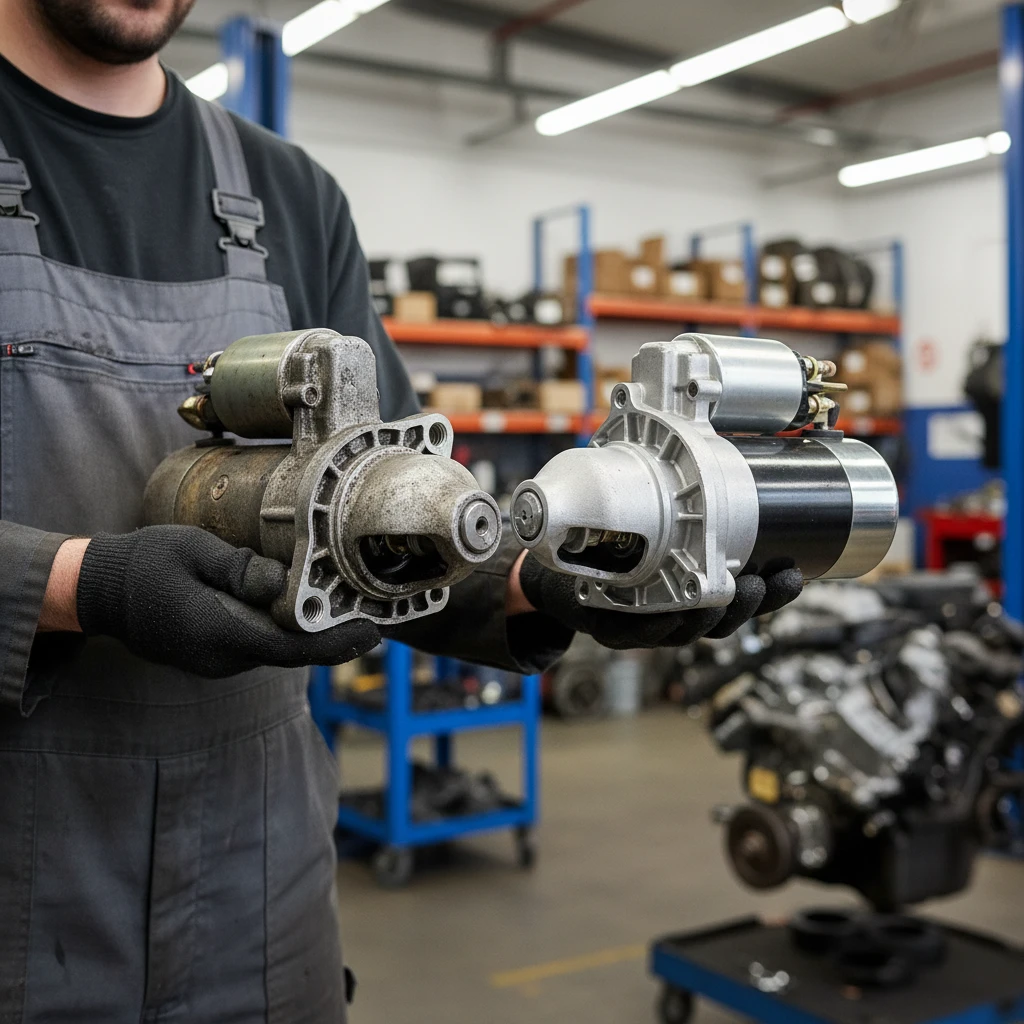
The Evolution of RX-8 Starters
Mazda realized this issue relatively early in the RX-8’s lifecycle and released updated versions of the starter. However, many Series 1 vehicles on New Zealand roads still retain the older, slower units. Understanding the model codes is essential:
- N3H1: The original, slower starter found on early models. Notorious for slow cranking speeds (approx. 230 RPM max).
- N3H1-A: An updated version, slightly better but still prone to weakness over time.
- N3Z1 / N3R3: The Series 2 (2009-2012) high-torque starter. This is the “Gold Standard” upgrade.
Benefits of the 2kW 14-Tooth Starter Upgrade
The solution to the Series 1 starting woes is universally acknowledged in the rotary community: install a Series 2 starter motor. Specifically, you are looking for the 2.0kW, 14-tooth model. This component was standard on the 2009-2012 RX-8s (R3 models) but is fully backward compatible with the older transmission.
Why Torque and Teeth Matter
The upgrade is superior for two primary physics-based reasons: power and gearing.
- Increased Power (2.0kW): The jump from 1.2kW or 1.4kW to 2.0kW represents a massive increase in torque. This allows the electric motor to overcome the internal friction of the engine much more easily, regardless of oil temperature or battery charge level.
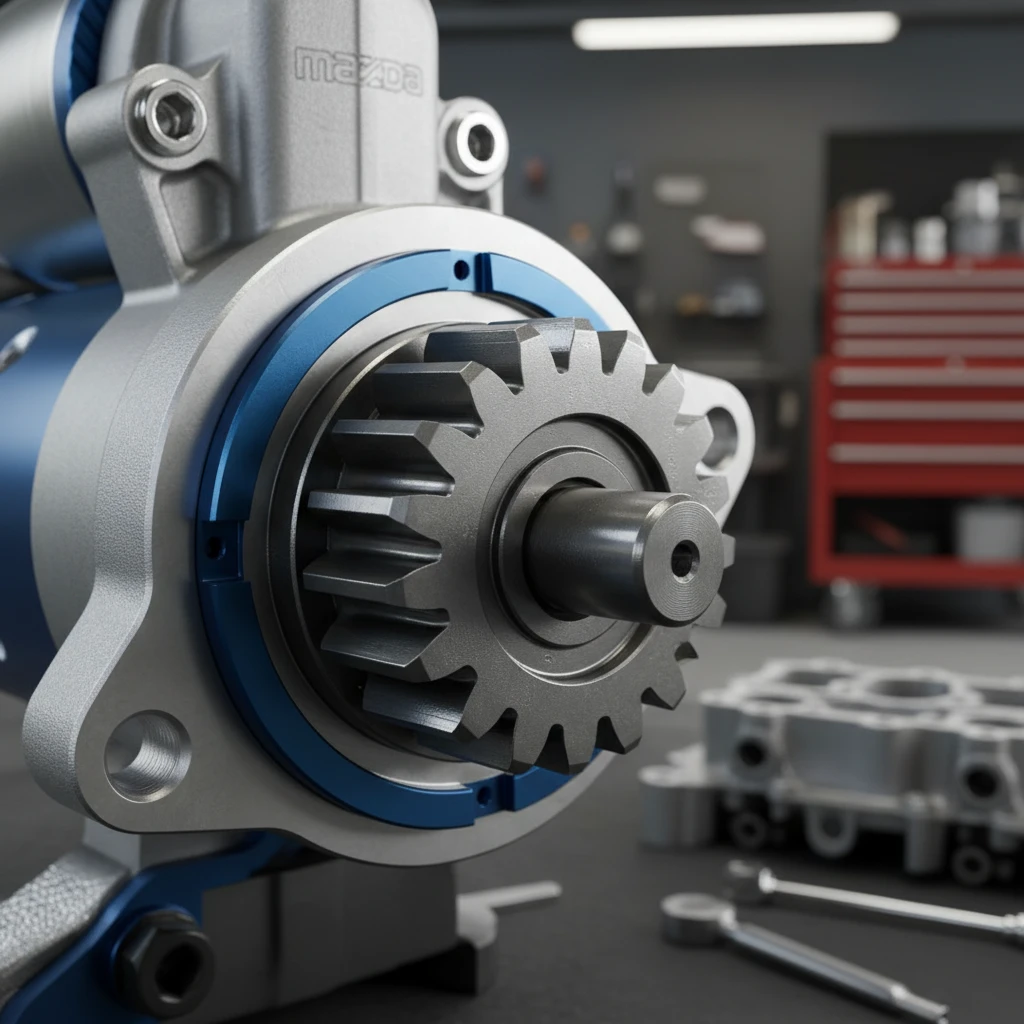
- Gearing (14 Teeth): The pinion gear on the upgraded starter features 14 teeth, compared to the 11 or 13 teeth found on older models. This gearing change spins the flywheel faster for every revolution of the starter motor.
The result is a cranking speed that jumps from a struggling 180-220 RPM to a robust 280-300+ RPM. In the world of rotary engines, that extra 80 RPM is the difference between a car that starts instantly and one that leaves you stranded at the petrol station.
Prevention of Engine Flooding
Engine flooding is a notorious issue for the RX-8, occurring when unburnt fuel washes the oil off the housing walls, causing a loss of compression. A slow starter contributes significantly to this because it injects fuel without spinning fast enough to ignite it. The 2kW starter spins the engine vigorously enough to clear out minor flooding and ignite the mixture immediately, drastically reducing the chances of flooding your engine.
RX8 Series 1 Starter Motor Price Analysis (NZ Market)
When searching for “rx8 series 1 starter motor price,” you will encounter a wide variance in costs depending on the source. In New Zealand, the market is split between Genuine Mazda parts, high-quality aftermarket brands, and cheaper generic knock-offs.
Current Market Rates (NZD)
Note: Prices are estimates based on current automotive aftermarket trends in New Zealand.
- Genuine Mazda (OEM) N3R3/N3Z1: $800 – $1,200 NZD. While these are the most reliable, they are also the most expensive. They are often special order items from Japan.
- High-Quality Aftermarket (e.g., Jaylec, OEX): $450 – $650 NZD. These are the sweet spot for most owners. They are often remanufactured units using OEM casings with upgraded internals to match the 2kW spec.
- Budget Aftermarket (Online Marketplaces): $200 – $350 NZD. Proceed with caution. While the price is attractive, quality control can be inconsistent. Ensure the unit is explicitly rated for 2.0kW and has the 14-tooth gear.
- Used / Second Hand: $150 – $300 NZD. Buying a used starter from a wrecker is a gamble. Unless it came off a confirmed Series 2 (2009+) car, you might just be buying another weak S1 starter.
Value Proposition: Investing $500 NZD in a quality starter is significantly cheaper than an engine rebuild. Many owners sell their RX-8s thinking the engine is blown due to hot start issues, when a $500 part could have fixed the car. Do not skimp on this component.

Compatibility and Installation Guide
One of the most common questions is regarding fitment. The good news is that Mazda maintained the same bellhousing bolt pattern for the 5-speed and 6-speed manual transmissions across both Series 1 and Series 2.
Does the S2 Starter fit the S1?
Yes. The Series 2 (2009-2012) starter motor is a direct bolt-on upgrade for the Series 1 (2003-2008) manual transmission RX-8. No modifications to the wiring harness, mounting bolts, or flywheel are required. It is a “plug and play” upgrade.
Installation Complexity
Replacing the starter motor on an RX-8 is a manageable DIY task for those with basic mechanical skills, though it can be fiddly.
- Location: The starter is located on the driver’s side (RHD markets like NZ) of the transmission bellhousing.
- Access: The car must be jacked up safely. Access is from underneath.
- The “Hidden” Bolt: There are two bolts holding the starter. The bottom bolt is easy to access. The top bolt is obscured and requires a long extension and a universal joint to reach. Patience is key here.
- Safety First: Always disconnect the negative battery terminal before starting work. The main power cable to the starter carries direct current from the battery and will arc if it touches the chassis.
Troubleshooting Before You Buy
Before you spend money on a new starter, it is prudent to ensure the starter is indeed the culprit. While the S1 starter is known to be weak, other factors can contribute to slow cranking.
Check Your Battery Health
A weak battery will make even the best starter motor perform poorly. The RX-8 requires a battery with high Cold Cranking Amps (CCA). In New Zealand’s climate, a battery with at least 600+ CCA is recommended. Have your battery load-tested at a local automotive shop.
Inspect Battery Cables and Grounds
Corrosion on the battery terminals or a loose ground strap can increase electrical resistance, robbing the starter of the amperage it needs. Check the negative cable where it grounds to the chassis and the engine block. Ensure these contact points are clean and tight.
Ignition Health
While ignition coils, wires, and spark plugs don’t affect cranking speed, they do affect starting time. If your starter is spinning fast (300 RPM) but the car still won’t catch, the issue is likely ignition or compression, not the starter motor.

Conclusion: The Best Upgrade for Your Dollar
For New Zealand RX-8 owners, the transition from a Series 1 to a Series 2 starter motor is not just a repair; it is a necessary upgrade for the reliability of the vehicle. The “rx8 series 1 starter motor price” is a small entry fee compared to the peace of mind gained from reliable hot starts.
By installing a 2.0kW, 14-tooth starter, you are essentially giving your Renesis engine the best possible chance to perform. You reduce the strain on the battery, eliminate the embarrassment of stalling at traffic lights, and protect against engine flooding. If your Series 1 is still running on its original N3H1 starter, treat this as a priority maintenance item. Your rotary engine will thank you with every instant startup.
People Also Ask
Will a Series 2 starter motor fit a Series 1 RX-8 automatic?
Generally, no. The high-torque starters discussed in this guide are designed for the manual transmission bellhousing. Automatic RX-8s use a different starter motor configuration. Always check the specific part number compatibility for automatic transmissions (often 4-port engines) before purchasing.
How do I know if my RX-8 starter is bad or if I have low compression?
The definitive way to tell is to get a rotary-specific compression test. However, a good rule of thumb is that if the engine cranks slowly (sounds like “rur… rur… rur” instead of a fast “whir-whir-whir”), the starter is likely the issue. If the starter spins very fast but the engine refuses to fire when hot, that is a classic symptom of low compression.
What is the part number for the upgraded RX-8 starter?
The most common part number for the upgraded Series 2 starter is N3R3-18-400. You may also see references to N3Z1. When buying aftermarket, look for cross-references to these numbers and verify the specs state “2.0kW” and “14 teeth.”
How long does it take to replace an RX-8 starter motor?
For a professional mechanic with a hoist, the job takes about 30 to 45 minutes. for a DIY enthusiast working on jack stands in a driveway, expect to spend 1 to 2 hours, primarily due to the difficulty of reaching the top mounting bolt.
Can I rebuild my old Series 1 starter to be faster?
While you can rebuild the S1 starter with new brushes and contacts to restore its original performance, you cannot easily modify it to match the torque and speed of the S2 unit. The S2 unit has a larger motor and different internal gearing. It is more cost-effective to replace the unit entirely.
Is the 2kW starter upgrade safe for the flywheel?
Yes, it is perfectly safe. The flywheel ring gear on the Series 1 and Series 2 RX-8s is compatible with the 14-tooth pinion gear of the upgraded starter. The engagement depth and gear pitch are designed to work seamlessly together.