
The most common symptoms of bad ignition coils in a Mazda RX-8 include rough idling, hesitation during acceleration, significant power loss at high RPMs, and difficulty starting the engine. If left unchecked, failing coils frequently cause misfires that lead to flashing check engine lights and catastrophic damage to the catalytic converter due to unburnt fuel.
For Mazda RX-8 owners in New Zealand, maintaining the ignition system is not just about performance; it is a critical safeguard for the longevity of the Renesis rotary engine. Unlike piston engines, where a misfire is an annoyance, ignition failure in a rotary can necessitate a complete engine rebuild. Recognizing the early warning signs is essential for preserving your vehicle.
Misfires and Power Loss
The most immediate and noticeable indication of ignition failure in the Mazda RX-8 is a degradation in engine performance. The Renesis engine relies on a high-energy ignition discharge to ignite the air-fuel mixture effectively as the rotor spins. When coils begin to degrade, they fail to deliver the necessary voltage, resulting in incomplete combustion.

Hesitation Under Load
One of the primary symptoms of bad ignition coils in an RX-8 is hesitation during acceleration. This often manifests as a “stumble” or a momentary pause when you depress the throttle. In New Zealand driving conditions, particularly when navigating the hilly terrain of regions like Wellington or the Coromandel, this hesitation becomes more pronounced under load. The engine may feel like it is struggling to climb through the rev range, specifically between 4,000 and 6,000 RPM, before the secondary injectors kick in.
High RPM Breakup
The rotary engine is designed to rev high, with a redline up to 9,000 RPM depending on the model year. Weak coils often struggle to recharge fast enough to keep up with the rapid firing sequence required at these speeds. If you experience a “breakup” or a sensation that the engine is hitting a wall before the redline, it is a classic sign of ignition coil degradation. This inability to maintain a spark at high frequencies significantly hampers the RX-8’s performance characteristics.
Hard Starting Issues
Starting difficulties are often attributed to low compression in rotary engines, but the ignition system plays an equally vital role. A weak spark cannot ignite the rich mixture required for a cold start or the leaner mixture of a hot start effectively.
The Hot Start Challenge
While cold start issues can occur, bad coils frequently exacerbate hot start problems. After a drive, heat soak increases the resistance in the electrical components. If the coils are already on the verge of failure, the added heat resistance can prevent them from generating a spark strong enough to turn the engine over quickly. If your RX-8 takes more than 2-3 seconds to fire up when the engine is at operating temperature, immediate investigation of the ignition system is required.
Flooding Risks
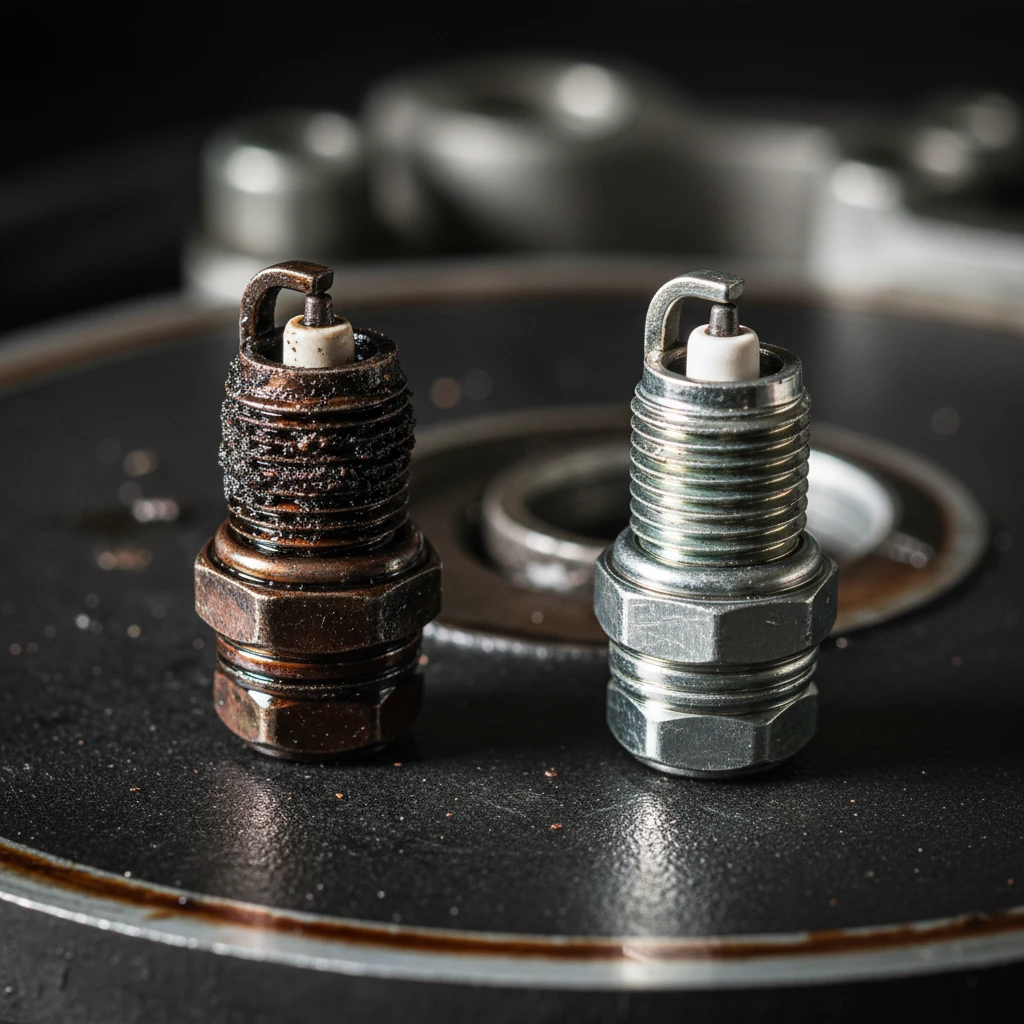
A direct consequence of failing coils during startup is engine flooding. Because fuel is being injected but not ignited, the spark plugs become fouled with wet petrol. In an RX-8, unflooding the engine is a tedious process that can drain your battery and wash away the oil film necessary for apex seal lubrication. If you find your vehicle is prone to flooding despite good compression numbers, the ignition coils are the likely culprit.
Catastrophic Converter Damage Risks
Perhaps the most severe financial risk associated with ignoring symptoms of bad ignition coils in an RX-8 is the destruction of the catalytic converter. This is a scenario where a few hundred dollars in maintenance can save thousands in repairs.
The Domino Effect of Unburnt Fuel
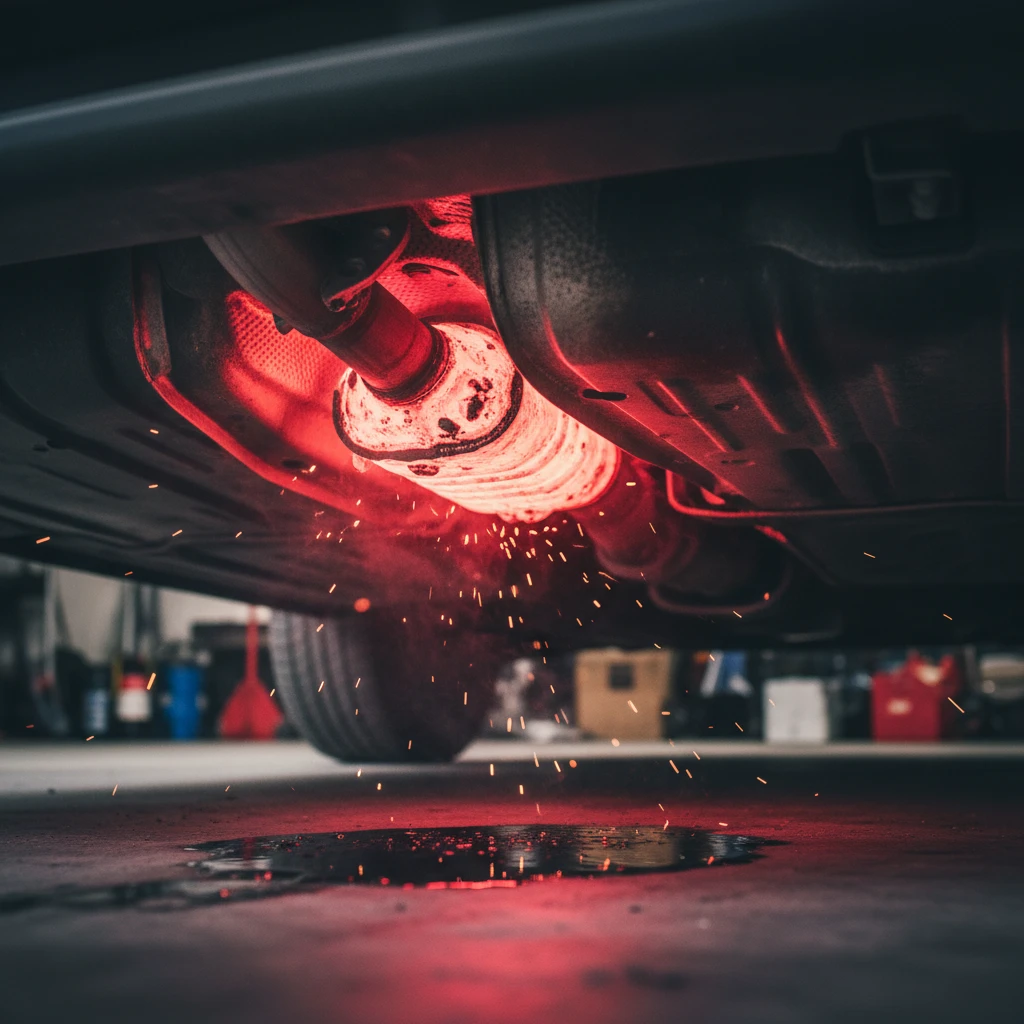
When an ignition coil fails to fire, the fuel intended for that combustion cycle is swept out of the exhaust port unburnt. This raw fuel enters the superheated environment of the catalytic converter. There, it ignites, causing temperatures to spike well beyond the converter’s design limits. This process effectively melts the internal honeycomb structure of the converter.
Engine Failure via Backpressure
A melted catalytic converter creates a blockage in the exhaust system. This blockage causes excessive backpressure and heat retention within the engine. For a rotary engine, this heat is lethal. It can warp the side housings and cause the apex seal springs to fail. In severe cases, the ceramic material from the converter can break down and be sucked back into the engine during the overlap phase, destroying the rotors and housings instantly. Therefore, a flashing Check Engine Light (indicating a misfire) should be treated as an emergency stop situation.
Rough Idle and Fuel Economy
Before catastrophic failure occurs, the car will often communicate its distress through subtler signs affecting daily drivability and running costs.
The “Rotary Shake”
While rotary engines are not as smooth at idle as a V12, a healthy Renesis should maintain a relatively steady idle around 850 RPM. Bad coils often cause a rough, hunting idle where the needle bounces, and the gear stick vibrates excessively. This is often referred to as the “rotary shake.” If the vibrations are strong enough to rattle interior trim or feel uncomfortable through the seat, the ignition system is failing to burn the fuel consistently at low RPM.
Decreased Fuel Efficiency
The Mazda RX-8 is not known for fuel economy, but a sudden spike in fuel consumption is a red flag. When coils fail, the engine computer (ECU) may attempt to compensate for the perceived lack of power by adding more fuel, or you may simply be wasting fuel on non-combustion cycles. If your typical range per tank drops noticeably without a change in driving habits, inspect your ignition components immediately.
How to Test Coils with a Multimeter
Testing your coils can confirm if they are the source of your issues. While a dedicated HEI spark tester is the most accurate method to test coil load, a digital multimeter can identify coils that have completely failed or are out of spec.

Step-by-Step Testing Procedure
- Safety First: Ensure the engine is cold and the ignition is off. Disconnect the negative battery terminal.
- Access the Coils: Remove the engine cover. The coils are located on the passenger side (for NZ RHD models) of the engine bay.
- Visual Inspection: Look for white spots or burn marks on the bottom of the coils. This “arcing” indicates the insulation has failed, and the coil must be replaced regardless of resistance readings.
- Set Multimeter: Set your multimeter to the Ohms (resistance) setting, specifically the 2k or 20k range.
- Test Secondary Resistance: Place the positive probe on the output terminal (where the spark plug wire connects) and the negative probe on the mounting bracket or ground pin. A healthy OEM coil typically reads between 1.4k and 1.6k Ohms.
- Interpret Results: If the reading is infinite (open circuit) or zero (short circuit), the coil is dead. If the reading is significantly outside the standard range, the coil is weak and requires replacement.
Note: A coil can pass a multimeter resistance test but still fail under the high load of a running engine. If symptoms persist despite passing this test, replace the coils.
Replacement Options in New Zealand
When sourcing replacements in the New Zealand automotive aftermarket, quality is paramount. The market is flooded with cheap, unbranded coils that often fail within a few thousand kilometers.
OEM Mazda Coils: The safest bet for stock vehicles. Ensure you are buying from a reputable dealer to avoid counterfeits.
High-Performance Aftermarket: For NZ owners who drive spiritedly or attend track days at Hampton Downs or Taupo, upgrading to a dwell-adjusted coil kit (such as the BHR or MSD ignition kits) is highly recommended. These kits use larger coils that dissipate heat better and provide a stronger spark, virtually eliminating the standard failure points of the OEM system.
People Also Ask
How long do RX-8 ignition coils last?
OEM Mazda RX-8 ignition coils typically last between 30,000 km and 50,000 km. Due to the high heat of the rotary engine, they are considered a consumable maintenance item and should be replaced proactively rather than waiting for failure.
Can I drive my RX-8 with a bad coil?
No, you should not drive with a bad coil. Doing so dumps unburnt fuel into the catalytic converter, which can melt it and destroy the engine via backpressure and heat. It also washes oil off the rotor housings, accelerating apex seal wear.
Should I replace spark plugs with the coils?
Yes, it is highly recommended to replace spark plugs and ignition leads (wires) simultaneously with coils. Bad coils can foul plugs, and worn plugs can strain new coils. Replacing all three ensures the ignition system functions at 100% efficiency.
What is the cost of ignition coils in NZ?
In New Zealand, a set of four genuine OEM coils can cost between $300 and $600 NZD depending on the supplier. High-performance aftermarket kits can range from $700 to $1,200 NZD but offer longer lifespans.
What are the symptoms of bad leading vs. trailing coils?
Leading coils (lower plugs) are responsible for the primary ignition; failure here usually results in starting issues and significant power loss. Trailing coils (upper plugs) clean up the combustion; failure here often manifests as a rough idle or high-RPM breakup.
Does a bad coil cause low compression?
Directly, no. However, driving with bad coils causes carbon buildup and washes away oil, which accelerates seal wear. Over time, this damage leads to permanent low compression, requiring an engine rebuild.